Could this be write for fundraising?

Emotion – not logic – is what moves donors to give, right? Then why do you see appeals based on logical arguments all the time?

It’s probably because that’s how we were all taught to write. With deductive reasoning. You start with a general premise, followed by the minor premise, then the conclusion.

It’s the way we were taught to write a paragraph. There’s the topic sentence, then supporting arguments, and then the conclusion.

Problem is, this might be how you get a good grade on a term paper, but it doesn’t work for fundraising.   

Here’s an example of an appeal from a nonprofit advocating for criminal justice reform:

Dear [Firstname],

One mistake or bad decision shouldn’t define someone’s life or value.

But for 78 million people with an old arrest or conviction record, a mistake can mean a lifetime of barriers to getting a job or accessing safe housing.

That’s why at [nonprofit], we and our more than 400,000 members are advocating for law changes that will expand access to stability and economic opportunity for the millions of Americans locked out of opportunity due to an old record. But we can’t do it without your help.

You can see the format. There’s the general premise: “One mistake or bad decision shouldn’t define someone’s life or value.”

There’s the minor premise: “But for 78 million people with an old arrest or conviction record, a mistake can mean a lifetime of barriers to getting a job or accessing safe housing.”

Then, the conclusion, which, for fundraising, is essentially, “Therefore, donate.” Here’s the conclusion: “That’s why at [nonprofit], we and our more than 400,000 members are advocating for law changes that will expand access to stability and economic opportunity for the millions of Americans locked out of opportunity due to an old record. But we can’t do it without your help.”

It probably seems to many nonprofits that this is how fundraising appeals should be written, because after all that’s how you write. That’s how the people in the nonprofit’s marketing department wrote their term papers.

But fundraising copy is nothing like a term paper. A fundraising appeal is a personal letter from one concerned individual to another. It’s about emotion, empathy, humanity, values, morals and more.

Not logic. People don’t make decisions based on logic. They made decisions based on emotion. You can’t argue or debate someone into donating. 

If you try, as in the example above, you get fundraising copy that’s cold, unempathetic, and unmotivating. 

This doesn’t mean you never use logic. A reason to give could be a logical point like, “Eliminating barriers to employment for people with criminal convictions means they become tax-paying residents.”

But arguments like these wouldn’t be the basis of the appeal. It’s far better to find the emotional core of the cause you’re raising funds for, and present that to donors. Then you’re reaching donors on the basis of empathy and shared values. And that’s where connection, compassion, and persuasion happen.

See the whole article at https://www.nonprofitpro.com/post/the-way-we-learn-to-write-is-all-wrong-for-fundraising/

Posted in copywriting, donor psychology, fundraising | Tagged , , , , , , , , , , | Leave a comment

Are you leaving your donors stranded?

There’s a strange disconnect that you see in a lot of fundraising appeals. The appeal starts off heading in one direction, then suddenly leaves donors stranded and wondering what happened.

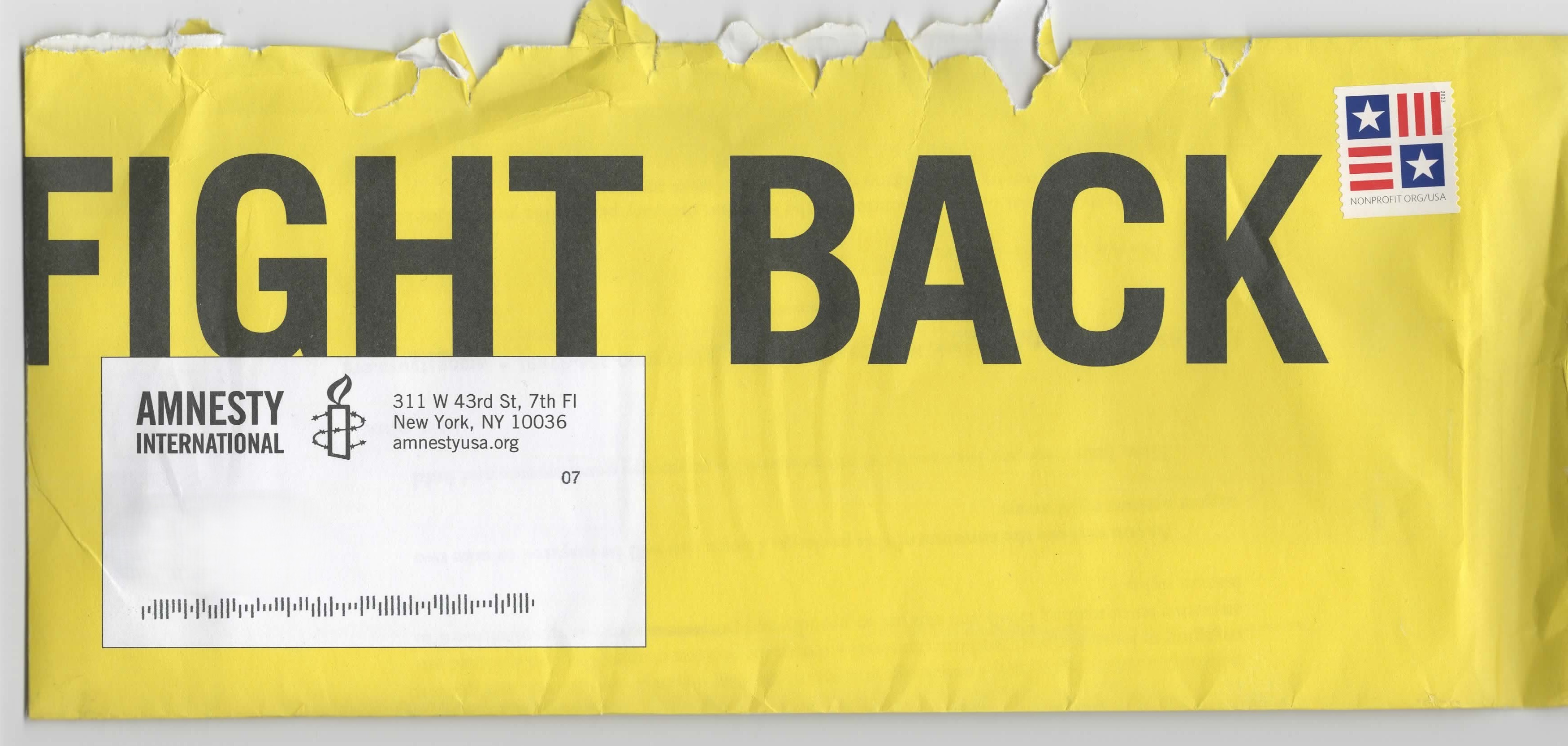
Here’s an example. In this appeal, for a charity that advocates for criminal justice reform, the envelope teaser is “2X match for second chances.”

So, it’s a matching grant offer. True, the teaser could have made that point a bit more directly. And the reference to “second chances” assumes that the donor knows the context. But let’s put those two things aside.

The real problem – the disconnect – happens when we get to the letter. It begins, “One mistake or bad decision shouldn’t define someone’s life or value.”

While that statement may indeed be true, what happened to the matching grant? It’s probably a main reason why a donor would open the envelope in the first place. The matching grant is a powerful motivator. So then, why would you start off talking about the matching grant on the outer envelope and then abruptly shift to a general statement about mistakes and bad decisions?

It’s bound to throw some donors off at the very least and to seem like a bait and switch at the very worst. Either way, any momentum that was gained with the teaser about the matching grant suddenly fizzles out.

Why do this? Once you get your donor primed with the envelope teaser, it’s best to follow through in the beginning of the letter with something that builds on that same thought.

Granted, there may be instances where you won’t want to do this – a letter lead that’s a pattern interrupt, for example. But that’s a specialized and risky technique.

The better approach is the direct approach, where you move your reader from envelope teaser or headline to the letter lead in a direct way. It’s easy to do.

If our envelope teaser is “2X match for second chances,” the letter lead could simply be, “Now your gift will double in impact to create a second chance for someone who simply made a bad decision.”

You’re reinforcing why the donor opened the envelope in the first place. You’re showing why the donor might want to take advantage of the matching grant. And you’re greatly increasing the odds that the donor will keep reading. It’s a win all the way around.

Posted in copywriting, donor psychology, fundraising | Tagged , , , , , , | Leave a comment

Your donors need to feel like they belong

Fundraising appeals often fail to convey a sense of belonging to donors. That’s too bad. It means nonprofits are missing out on a major reason why donors give.

Donors want to feel like they belong. They want to feel like they’re part of the team.

In fact, it’s essential for revenue and retention. But how do you square donors’ need for belonging with the fact that giving is often a solitary activity?

Think of it. A donor gets an appeal in her mailbox or email inbox. She opens it, glances through it, and decides whether to write a check or give online. Not a lot of shared experience in that.

For most donors, your fundraising appeals are the only thing they’ll ever see of your nonprofit.

Some donors will attend your events. Some will take the tour. But most won’t. But that doesn’t mean your donors shouldn’t feel like they’re insiders. Because they certainly are.

One way to bring donors inside the tent is the messaging in your appeals. You can say, for example, “You’re one of us. You see someone on the street picking in a trash can, and your heart goes out to that person. You want to help. You believe what we believe — that no one should have to live on the streets.” Messaging like this conveys community and shared values.

Other ways to create a sense of belonging? There are membership cards, bumper stickers, window clings, refrigerator magnets, and more. They’re all ways for donors to feel part of the in-group.

There’s your sustainer program. Belonging is one of the benefits of monthly giving, president’s clubs, and other giving groups.

There are the stories you tell. You can include not only the donor and the beneficiary but also staff, the volunteers, the case manager and others where appropriate. Why not have a group photo with the beneficiary and staff to show the donor they’re not alone but part of the group?

There’s inside information. This could be an impact report, a financial report, an annual report, a memo from the executive director, a message from somebody in the field and so on. Lots of possibilities here. They make your donors feel like they’re in on the action.

There are donor testimonials. Why-I-give statements tell donors there are other supporters like them.

There are surveys. Asking donors for feedback is often effective, since we all love giving our opinions. But don’t stop there. Report the results (maybe in your newsletter), so donors can see what other donors think. 

There’s more in the full article at https://tinyurl.com/28ws2hy5. Fulfilling the need for belonging is a vital way for nonprofits to connect with donors. And a vital way to be donor centric in your fundraising, with the increases in revenue and retention that come with it.

Posted in copywriting, donor psychology, fundraising | Tagged , , , , , , , , | Leave a comment

Don’t hide from your donors — communicate with them

You really should be mailing and emailing your donors more often. Why? Because…

Your donors want to hear from you. They want to know what your nonprofit is doing. They want to know when their help is needed. They want to donate. And they expect to donate because they understand how nonprofits operate. If they didn’t, they wouldn’t be on your donor rolls in the first place.

So, of course they expect to get your fundraising appeals. Still, what about the dreaded too-much-mail complaint?

Simple. You can respond to it by respecting donors’ individual preferences. And offering them your sustainer program as an option for receiving less mail.

Here’s the point: It does your nonprofit no good to restrict the appeals you send and hide from your donors. Your fundraising isn’t an intrusion in your donors’ lives, as some nonprofits seem to believe. Your fundraising is how you have a relationship with your donors. In fact, for most of your donors, your fundraising is all they’ll ever see of your nonprofit. Sure, some donors go to events, and some take the tour. But for most of your donors, your fundraising IS your nonprofit.

And it’s pretty hard to have a strong relationship with your donors – let alone build your nonprofit’s brand — if they only hear from you once or twice a year.

Then again, it’s not just about mailing more. It’s about mailing smarter too. That means:

Asking your donors how often they want to hear from you and through what media, and honoring their preferences.

Mailing less to lower-dollar donors.

Mailing more to higher-dollar donors and using appeals with specialized messaging and production values.

Letting lower-dollar lapsed donors go while reactivating higher-dollar lapsed donors.

Adding extra appeals during high-response times like Christmas, Thanksgiving, and year end.

And adding a donor-centric newsletter with success stories about your donor’s support at work.

What it comes down to is this: You have to get your message in front of your donors – repeatedly. Otherwise, they’re likely to forget all about you. That’s a much greater risk than an occasional complaint about too much mail or email. You can see more here: https://tinyurl.com/yr7mwacw

Posted in copywriting, donor psychology, fundraising | Tagged , , , , , , , , | Leave a comment

How and why to get the copy voice right in fundraising appeals

Why would a nonprofit, say, one fighting climate change, use messaging like this for a fundraising appeal. …

Dear Ms. Joan Sample,

I am writing to you today from [charity], a dedicated advocate for climate action and environmental sustainability. As you may know, our planet is facing unprecedented challenges due to climate change, and the need for immediate action has never been more urgent.

At [charity], we are committed to combating climate change through innovative projects, community engagement, and policy advocacy. Our recent initiatives include installing an array of solar panels, which have already made a significant impact. However, to continue this vital work, we need your support.

… when they could use messaging like this instead …

Dear Ms. Joan Sample,

I am writing this appeal on a hot July afternoon.

My 11-month-old son is playing at my feet as I do. I look at Joe and I look at the blazing heat outside and I wonder how I can avoid talking about the greenhouse effect in nakedly personal terms. 

But why shouldn’t I? Why shouldn’t I tell you how much I fear for the world we’re preparing for Joe?

The first appeal reads like a corporate memo coming out of the accounting department at IBM. It’s predictable, bland, and deadly boring.

The second one reads like it was written by an actual living, breathing, feeling person. It hasn’t been reviewed to death by a committee. It’s honest, relatable, personal, and human. When you read it, it draws you in. And even better, it makes you more receptive to whatever will follow.

That’s the reaction we want to elicit from donors, and it comes from using an engaging copy voice. Many nonprofits struggle to get this right, for a number of reasons.

They feel they have to speak to donors from a position of expertise and authority about the cause. But then the copy becomes long and pretentious.

They use industry jargon and buzz words like “food insecure.” But then the copy confuses donors and keeps them at arm’s length.

They think that the appeal letter has to sound like the president or executive director. But then the copy talks past donors, not at them, because what the president thinks is motivating often isn’t what donors think is motivating.

What it comes down to is this: donors, like most people, respond best to plain talk. That’s why good fundraising copywriting is conversational. It’s write-like-you-talk writing. Simple words, short sentences, short paragraphs, with contractions, sentence fragments, and all the rest.

The appeal should read like it was written by a friendly, thoughtful person who’s concerned about an issue and hopes the reader will be too. That human connection builds a rapport with donors. And that turns into a relationship with donors. And donors who have a relationship with your nonprofit will likely give more and give more often, which means increases in revenue and retention. You can see more here: https://tinyurl.com/ye269hxe

Posted in copywriting, donor psychology | Tagged , , , , , , , , , | Leave a comment

One of the main reasons why donors give

It’s a strange quirk of nonprofits, but a lot of their fundraising seems intent on denying their donors the one thing that those donors want the most.

Donors want action. They want something to be accomplished.

Action on an issue that donors care about is one of the primary reasons for giving a gift. That issue could be hunger, poverty, homelessness, animal abuse, social justice, or any of a thousand others. Whatever it is, your donors are on your list because they want to see something get done.

Stories, happy photos, sad photos, envelopes with teasers, envelopes without teasers – these things and many more like them are all a part of direct mail fundraising, and they’re all important.

But when it comes down to the moment of truth, when a donor is deciding whether to give or not give, there’s a question in the donor’s mind, and that question is probably, Will my donation actually accomplish anything?

So it’s curious why so many nonprofits send out fundraising appeals with offers based on vague generalizations like “give hope,” “stand with us,” “join our movement,” and “make a difference” instead of specifics on what the donor’s gift will do.

You see this all the time. You get an appeal from a not-for-profit hospital asking you to donate. They could – emphasize could — ask you to fund something specific and actionable like a clinical trial for a new cancer drug. They could give you the opportunity to make something happen, create some kind of change, and move cancer research closer to the goal. That has a good chance of eliciting a donation.

Instead, the appeal talks in vague generalities about enhancing the well-being of the community, how much the hospital cares about each and every resident, and how the hospital is the premier health system in the state. That has a good chance of eliciting a yawn.

That’s because donors see through this nonsense and ambiguity. They want action. They want their donation to do something, to mean something. When the copywriting in a fundraising appeal clearly conveys what the donor can accomplish, you’re connecting with donors on the level of their personal values. And with that connection in place, donors are far more likely to reward your nonprofit with a gift. You can see more about this here: https://tinyurl.com/nhevffms

Posted in copywriting, donor psychology, fundraising | Tagged , , , , , , , , | Leave a comment

Give your donors a specific problem to solve

Not sure why nonprofits do this…

The teaser on the outer envelope is “Share hope this summer.” And the subhead is “See inside how you’re making an impact for neighbors like Ken.” There’s also a photo, presumably of Ken.

This says practically nothing to a potential donor. It’s soft and mushy. It’s vague and abstract. And it fails to present a problem the donor can solve.

In this case, the problem is real and specific. It’s life or death, in fact. People who are homeless will suffer and die in the searing heat of the summer, especially with temperatures soaring above 100 degrees.

That’s what we’re talking about here. That’s the problem, and “Share hope this summer” doesn’t begin to cover it.

The letter copy also avoids the problem. It opens with Ken’s story about how he’s homeless and how his skin condition is worsened by the heat, then shifts to, “The high temperatures of summer can make life without shelter dangerous. You can make a profound difference for our neighbors with a generous gift of $10, $15, or even $20 today.”

“High temperatures can make life dangerous” isn’t a specific problem, and “you can make a profound difference” isn’t a specific solution. What will my $10 do? Nowhere in the letter does it say, other than bland phrases like “providing critical services and programs.”

So, why do nonprofits do this? Maybe they’re afraid of being criticized for “saviorism” or “othering.” Maybe they don’t want their appeals to be a downer. Maybe they think talking about a problem somehow overshadows the good work they do. Maybe…who knows?

The reality is that not presenting a problem to donors results in soft, mushy appeals that just make donors shrug. You want appeals that are direct and to the point, because they make donors react. See more about this here.

Posted in copywriting, donor psychology, fundraising | Tagged , , , , , , , , , | Leave a comment

Grammar rules you can’t break in fundraising copy and some you can

Grammar rules? For fundraising copy?

Yes.

Hold on a minute. Shouldn’t fundraising copy be all informal and conversational? And doesn’t “conversational” mean that we routinely break so-called grammar rules and begin sentences with “and” or “but,” use contractions, end sentences with prepositions, and more?

Yes to that too.

But still, there are some grammar rules you can’t break, simply because breaking them causes confusion for readers – and that we definitely don’t want. Here are three of those unbreakable rules (from my article in NonProfitPRO: https://tinyurl.com/4pnwtpx8).

The dangling modifier. Take this example: “It’s so easy to forget that plants are quiet miracles. Often small, underfoot, and seemingly plentiful, we overlook their clever design and chemical superpowers.” In the second sentence, the phrase “Often small, underfoot, and seemingly plentiful” modifies “we” when it should modify “plants.” It’s not we who are often small, underfoot, and seemingly plentiful. It’s plants. This error is really common, but it causes a lot of confusion for readers.

Subject-verb agreement. You wouldn’t say “Children in Darfur is starving,” you’d say, “Children in Darfur are starving.” That’s pretty obvious subject-verb agreement. The problem comes in when other phrases get in the way. Take this example: “A shipment of lifesaving vaccines are being unloaded now in Africa.” The problem is that the subject of the sentence is “shipment,” not “vaccines.” The verb has to agree with “shipment.” That sentence should be “A shipment of lifesaving vaccines is being unloaded…” not “are being unloaded.”

Run-on sentence. This is when two sentences are jammed together without the right punctuation, as in: “Too many seniors are struggling with hunger and isolation, they need the help that your gift provides.” That comma is linking those two separate ideas. It’s an error called a comma splice. They should really be linked with a semicolon, or better yet, they should be two separate sentences.

A grammatical error in fundraising copy isn’t the end of the world, of course. Still, errors like these can cause confusion and distract donors from the fundraising message. And when that happens, you’re more likely to lose the donation instead of winning it.

Posted in copywriting, donor psychology, fundraising | Tagged , , , , , , , , , , , , | Leave a comment

Why your fundraising appeal needs more urgency

There’s a moment when your donor looks over your direct mail or email appeal and thinks, “I’ll put this aside for now and maybe help with that a little later.”

That’s the moment when you realize your appeal didn’t have something it needed – urgency.

Here are some ways around that problem from my article, How to Ramp Up the Urgency in Appeals and Boost Response, in Nonprofit Pro.

Use a deadline. We’re all conditioned to respond to deadlines. This includes actual deadlines (like year end, Giving Tuesday, and others), sensible deadlines (like National Doctor’s Day, fund drive deadlines, and so on), and even random deadlines (like ‘respond in the next 7 days.’). Deadlines tend to focus the mind.

Create immediacy. Center your appeal around a timeframe in the very near future. That makes your ask more actionable. “Your gift today will save the life of someone who’s homeless. Just a few weeks from now, in January, temperatures will plummet. That’s no time to be out on the street. The cold kills. Before that happens, please give now to provide safe shelter.”

Show the consequences of not giving. Often, avoiding a negative outcome is more motivating. “Our criminal justice system in this country is unjust for low-income people. Please give now to help create a more equal justice system by eliminating cash bail. Unless you help, people who are detained before trial because they can’t make bail will lose their jobs, their housing, and even custody of their children.”

Amp up the emotion. You could say, “Help reduce infant mortality in Africa” or you could make it more emotional with something like “In a cinder-block hut in Uganda, a young mother, weeping. A father, broken. Their newborn baby girl lies dead, open mouthed to the night air. Please give now when just $25 can save a precious new life.” An emotional ask is more urgent in a way that a bland, factual ask could never be.

Urgency is vital in appeals. Because sometimes donors just need that little, extra nudge to realize all the good they can do.

Posted in copywriting, donor psychology, fundraising | Tagged , , , , , , , , , , , | Leave a comment

Why is the copy for direct response fundraising so weird?

It’s not weird, really. But it is way different from academic, business, or journalistic writing, and so it can seem weird to the (uninitiated) people at nonprofits who review copy.

As my article in NonprofitPRO points out:

Good copy is simple. It uses short words, sentences, and paragraphs, without jargon. That doesn’t mean it’s dumbed down, as some nonprofits think. That means it’s plain talk, which everyone appreciates, including donors.

Good copy is repetitive. You need to repeat the important points, because most donors don’t read a letter or email from front to back. They skim. Repeating key concepts means you have a better chance of grabbing attention.

Good copy is dramatic. To get donors’ attention and keep it, copy has to have emotional content. It has to have drama. But then it’s seen as over the top by some at the nonprofit. That’s too bad. Toning down the copy just leads to boring copy. As David Ogilvy said, “You can’t bore people into buying.” Well you can’t bore them into giving either.

Direct response copy is the way it is because that’s what donors respond to. You can see more about why this is the case by clicking here.

Posted in copywriting, donor psychology, fundraising | Tagged , , , , , , , , , | Leave a comment